

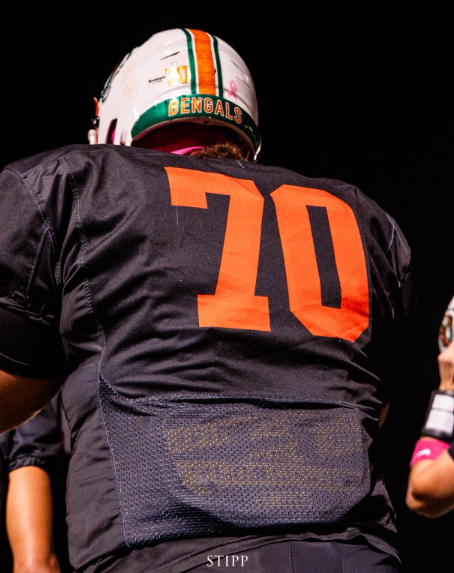
High school athletes often have to make peace with the fact that they risk getting hurt. Whether it’s a lineman up against someone twice their size during a football game, a wrestler severely outmatched in a varsity meet, or even the vast number of students participating in weight training– athletes run the risk of short or long term injury, even if one takes the proper precautions. In fact, according to a study by the National Library of Medicine, 90% of athletes will sustain an injury at some point in their career. This is, however, largely skewed in favor of sprains, strains, and concussions rather than injuries that require surgery or long-term physical therapy.
But for our athletes that are bouncing back from a more severe injury, what does their road to recovery look like? For Plainfield East third baseman Carter Ray, he sums it up in a single word: Struggle.
As an athlete that had to endure the recovery process for over eight months, there was a lot to speak about. Sustaining several injuries in his shoulder after a collision at home plate, Ray spent a lot of his time in the presence of his friends in the months that followed. His teammates and the people around him helped him “as much as they could”.
“It made it easier physically but harder emotionally,” said Ray. He described the pressure he felt being helped with everything he did, as if he was incapable. It was discouraging for him, even advising his peers to “treat me like how I used to be.” This dogged urge to feel equal fuelled his motivation to play harder once he returned.
Ray suffered an additional injury due to overuse. Being a third baseman, he would have to use his arm again and again during his games. Rather than preserve his arm, he pushed through his concerns and tried to make up the time he missed in recovery. “I was excited to be back, I was probably at the time overworking myself and I wasn’t thinking about the consequences that it could have caused,” said Ray.
Ray has since recovered enough to return for the next baseball season without any lasting effects. However, other players at East could tell you a different story.
Cameron Murray has been playing football for ten years, and has been an active lineman for the Bengals since his freshman year. The incident that started his road to recovery began with a near-universal experience for someone in weight training, an awkward pain during a workout. For Murray, he was doing squats until a painful pop in his knee drew his attention. This pop, while only momentarily alarming, would go ignored by Murray as he continued his workout. Pain like this was normal– routine even. He would just have to endure this pain and move on, like he always did. However, his pain has since gotten worse over the course of his career, impeding his ability to use stairs or even sit down. This routine pain became a detriment to his health, simply by ignoring it.
“I feel like I probably would have been back to 100% if I stopped when it started to get worse. I told myself it was better to stop, but I didn’t want to leave in the middle of the season. Now, I’m sitting here on my second round of physical therapy,” said Murray.
In spite of all of this, Murray will return to athletics upon finishing his physical therapy. But within each of these athletes, there was a recurring sense of neglect in the pain that they were experiencing. Not just the physical, but also the emotional. Ray described his recovery as simply waiting until he was better again, burying himself in work and studying in order to kill the time. Murray’s recovery is pockmarked with regrets– questions over what kind of athlete he could have been had he allowed himself rest. Both are carried by their love for their sport, and neither are able to endure their struggles without it. These athletes are only a snapshot into what many other athletes could be experiencing.
A common thread that runs through both of these stories was their preventability. The injuries themselves may have happened from a mistake or chance, but both of these athletes shared similar viewpoints as to how they should have handled their injuries. An active, more cautious response could have led to a faster recovery, but more importantly, less lasting damage on their bodies. The natural urge to “fight the pain” would end up being counter-productive. Whether out of a lack of proper knowledge, outside pressure, or plain stubbornness, athletes can force a small injury into something that can impact their whole lives. These are not only preventable reasons, but symptoms of a wider culture that needs to change.
It’s easy to look at incidents like these with a level of hindsight and isolation, but both of them highlight a culture of resilience rather than recovery. There’s nothing admirable about enduring pain unnecessarily, and there is no strength in stubbornness.