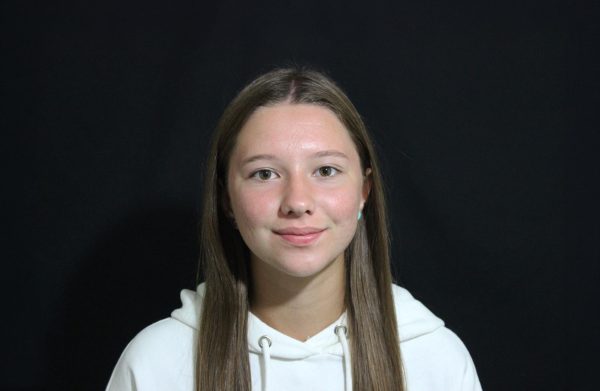

Just a few years ago, Elina Svitolina faced the lowest point of her career: injuries, self-doubt, and the weight of expectations pressing on her shoulders. Now, she stands among the sport’s elite once again, her name etched in the ranks of the world’s best. Her story isn’t just about tennis, it’s about the power to rise, rebuild, and inspire a nation.
Born in Odesa, Ukraine, Svitolina began swinging a racket at the age of five, learning to compete with a mix of discipline and determination. What started on local courts quickly turned into a world-class career. Her early promise caught international attention, and under the guidance of coach Raemon Sluiter and team captain Mikhail Filma, she developed into one of Ukraine’s top athletes.
By May 2017, Svitolina had broken new ground, becoming the first Ukrainian woman to reach the world’s Top 10 rankings. That year, she also claimed victory at the WTA Finals, a turning point that signaled her arrival among tennis’s elite. Over time, she has collected 17 WTA singles titles and a bronze medal at the Tokyo 2020 Olympics, establishing herself as one of the most decorated players in Ukraine’s history.
Her game is built on defense, speed, and mental toughness. Few players move across the court with her balance and anticipation. Svitolina’s quick reflexes and ability to turn defense into offense make her a formidable opponent, even against the world’s top seeds. However, critics note that her second serve can be vulnerable, often targeted by rivals seeking to break her rhythm.
Despite this, Svitolina continues to prove her resilience. During the 2023 season, she captured the Starschord Open and reached the Wimbledon semifinals, one of her most memorable performances. The achievement was not just a personal triumph it reignited national pride at a time when Ukraine needed hope the most.
“War made me stronger and also made me mentally tougher,” Svitolina said in an interview. “Mentally, I don’t take difficult situations as disasters, you know? There are worse things in life. I’m just calmer now” Svitolina said.
Her composure has become one of her defining traits. Whether she’s rallying on grass, clay, or hard court, she plays with quiet intensity and emotional control. That mindset has carried her through matches where others might crumble.
At the Australian Open, she showed that same poise, defeating a two-time Grand Slam champion and three-time quarterfinalist, reminding the tennis world that her best days are far from over.
Svitolina’s influence extends beyond competition. As a public figure, she has used her platform to help others, especially young athletes affected by the war in Ukraine. Through her foundation, she provides opportunities for children to continue playing tennis and training abroad.
“Right now, we’re helping kids who are playing tennis,” she explained. “The goal is to give them a chance to keep pursuing their tennis dreams. We give them the opportunity to continue training in Europe” Svitolina said.
Her daily training reflects the same balance of passion and precision. She spends three to five hours a day practicing mixing technique work, match play, fitness, recovery, and nutrition. Svitolina knows that success in tennis isn’t only about skill it’s about endurance and preparation.
Her career hasn’t been without setbacks. Shoulder injuries, mental pressure, and the constant grind of international competition have tested her limits and each challenge has shaped her into a stronger athlete and leader.
Svitolina’s rivalry with players like Simona Halep has produced some of women’s tennis’s most compelling battles. But for her competition isn’t just about trophies, it’s about progress and pride.
“My goal is to play in the Olympics here in Paris,” Svitolina said. “Hopefully, Monfils and I can both prepare in the best way possible. I’ll try to be 100 percent ready and do my best with the hope of bringing home another medal for Ukraine” Svitolina said.
Even as she looks to the future, Svitolina is aware of time’s passing. “Right now, I just say to myself I think it’s fewer years I have in front than behind me,” she said. “I have to go for it,” Svitolina said.
From a young girl in Odessa to a global symbol of strength, Elina Svitolina’s journey is more than a story of competition. She continues to inspire millions, proving that true champions don’t just play to win, they play to overcome, to lead and to give others hope.