
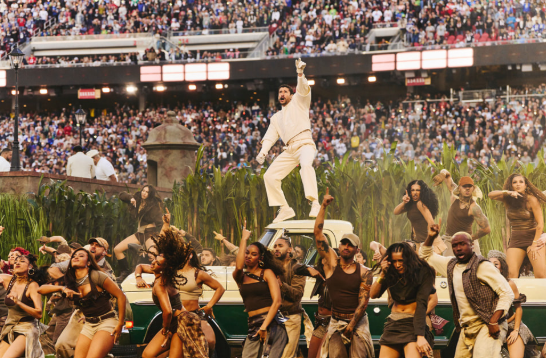
At Super Bowl 60, Bad Bunny delivered an impactful halftime show performance that amassed an average of 128.2 million viewers last Sunday, making it one of the most-watched shows ever. In his performance, the globally known Latin singer paid homage to his homeland of Puerto Rico through rich symbolism and artistic tributes that referenced the island’s vibrant history and culture. Despite the hateful backlash the singer faced from conservatives claiming the show simply wasn’t “American enough”, Bad Bunny responded to any criticism and skepticism by delivering an emotionally charged and lively performance that celebrated immigrants, uplifted the Latino community in a time of intense turmoil and fear, and celebrated the beauty of America as a whole.
The show opened with the singer in a sugarcane field, a nod to Puerto Rico’s agricultural roots and longstanding sugarcane industry, where he sang “Titi Me Pregunto”, setting an upbeat tone for a night of celebration and culture. The setting then shifted to one of the most prominent stage pieces, “La Casita”, a tribute to the traditional house styles seen in Puerto Rico, where an array of Latino celebrities were seen dancing and celebrating. This display, while seemingly carefree and lighthearted, served a deeper purpose: even in the face of hate, unity and joy persevere.
One of the biggest surprises of the night was a special appearance from Lady Gaga, who sang a salsa rendition of her hit song “Die With a Smile” to celebrate the real marriage ceremony that took place during the performance, further emphasizing the importance of family and unity in the community.
Following the wedding celebration, Bad Bunny performed one of his most-streamed songs, “Nuevayol”, an ode to the city known for its culturally rich ties to Latino communities, specifically Puerto Rico. A particularly heartfelt moment from this scene was a cameo from one of Puerto Rico’s beloved community figures, Maria Antonia, or “Tonita”, who is the 85-year-old owner of Brooklyn Caribbean Social Club, one of the last remaining Puerto Rican social clubs in the city. This was a subtle yet powerful tribute to the dangerous erasure that Latino communities face, serving as a way to uplift his people while emphasizing the intentionality behind every detail in the show.
This was followed by a heartwarming moment as Bad Bunny was seen handing his Grammy award over to a younger boy, meant to represent his younger self.
The second guest singer of the night, Ricky Martin, sang “Lo Que Le Paso A Hawaii”, a song about preserving Puerto Rico’s cultural identity and protecting the island from gentrification.
This short but stirring performance was followed by one of the heavier themes of the night in which Bad Bunny sang “El Apagón,” which translates to “The Blackout”, in “which the singer climbed a broken utility pole. This moment served to highlight the ongoing issues Puerto Rico faces in natural disaster recovery and infrastructure repair, stemming from a longstanding history of neglect by the Federal government.
The singer closed out the night by declaring “God Bless America” and then proceeded to shout out to every country in the Americas, offering each community a moment of recognition and support in the midst of their struggles. He then held up a football inscribed with “Together we are America,” while in the background, the words “The only thing more powerful than hate is love” could be visible, reinforcing the night’s overarching message of solidarity and resilience.
Bad Bunny’s Super Bowl performance was a transformative celebration of Latin culture within America and the rich history of Puerto Rico, serving to remind viewers that in the face of rising hate targeted toward immigrants, love and hope can be the greatest form of hope. This show also went to confront anti-immigrant sentiments and highlighted that America is truly a more vibrant and thriving country with diverse communities. Ultimately, this performance served more than just a form of entertainment for Super Bowl viewers; it became a platform for uplifting Latino communities and reclaiming space in mainstream media.