

Under the glow of the Friday night lights, senior Jenifer Serna would play, her sound carrying above the rest of a 100 person ensemble. Everyone’s felt nerves before– the butterflies before a presentation, the jitters before a performance. However, it takes a special kind of strength to continuously be put in that position, and face it without flinching. Luckily, Serna is more than qualified.
However, in an academic culture where constantly exceeding past expectations and continuously pushing yourself to the brink is considered the norm, when do students need to recognize the thin line between being the “perfect student,” and burnout? More importantly, when does it stop being “worth it.”
“[Students] love to gloat about things: ‘Oh, I’m in so many things, I’m the president of this club, the secretary of that club,” said Serna. “I feel like no one really talks about how hard it is to be [that student].”
A resume including several different musical ensembles, varsity wrestling, as well as a participant in both clubs and honors societies will appear shiny and refined to college admissions. But what does it look like behind closed doors? What many don’t see is that behind the persona is often a person on the brink of buckling.
Academic and extracurricular related pressure can take a person to a dark place.
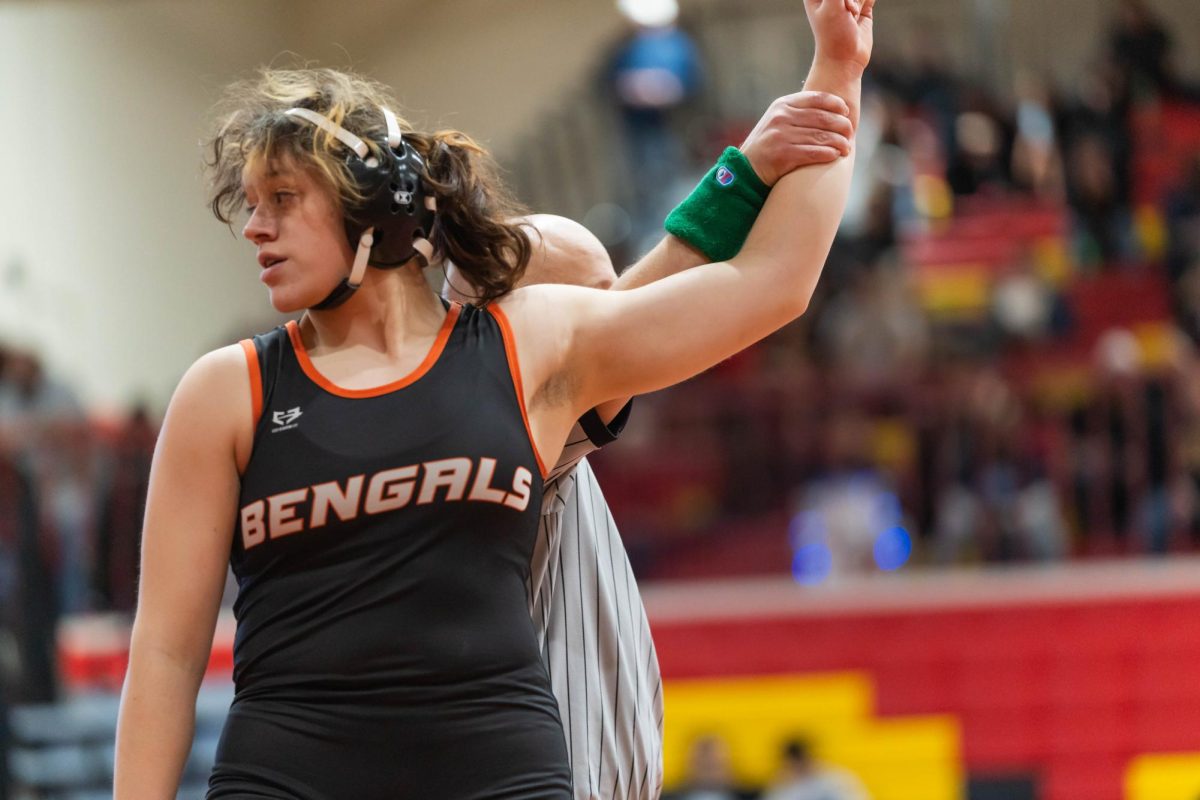
“I went through a little bit of a depression because of the pressure of my sport. Wrestling is not the easiest thing, it’s a lot of mental struggle,” said Serna. “I was also balancing a lot of [issues] at the time too, which kind of drove me to a not stable point in my life. Something I would never go back to.”
Finding the middle ground is obviously easier said than done. When caught in the cycle of continuous outside pressure, it can seem like fighting an uphill battle.
“It was getting too much to the point where it didn’t feel fair,” said Serna.
However, in participating in what is considered to be a sport that is 90% mental, Serna managed to find her way. To quote Dan Gable, “once you’ve wrestled, you can do anything.”
“[Wrestling] has a lot to do with willpower. Once the season is over, you just feel a sense of relief and control,” said Serna. “Like: ‘Ok, I can do one more minute. I can keep doing this. I can keep going.’”
In recognizing the mental block of not just her sport, but also academics, Serna was able to bring herself out the hole she had previously found herself in. Now being on the other side, she realized one of the most important lessons that could’ve come from her struggle: perspective. Serna, in a contradiction to the tough nature of sport, met her situation with nothing but care and gentleness.
“It’s going to be ok. It’s not the end of the world. That’s when I started putting the same message into everything I did. You don’t want to put too much pressure on yourself, it’s never sustainable,” said Serna.
It’s hard to tell a person in the midst of a mental battle that everything will be ok. Chances are, they’ve heard it before. In Serna’s eyes, “After someone heard me out, I started realizing it’s going to be ok.”